Short answer
A chapati recipe needs flour, warm water, salt and oil. Knead a soft dough, rest it, roll it out, brush with oil and coil for layers, then cook each round on a hot pan with a little oil until golden spots appear.
A chapati recipe starts with flour, warm water, salt and a little oil, kneaded into a soft dough, rested, rolled thin, brushed with oil and coiled for layers, then cooked on a hot pan until golden spots form. This chapati recipe makes eight soft, layered flatbreads in about an hour.
What is chapati?
Chapati, also spelled chapatti, is a thin, round, unleavened flatbread cooked on a flat pan. It is eaten across East Africa and South Asia, with differences in flour, layering and fat between regions.
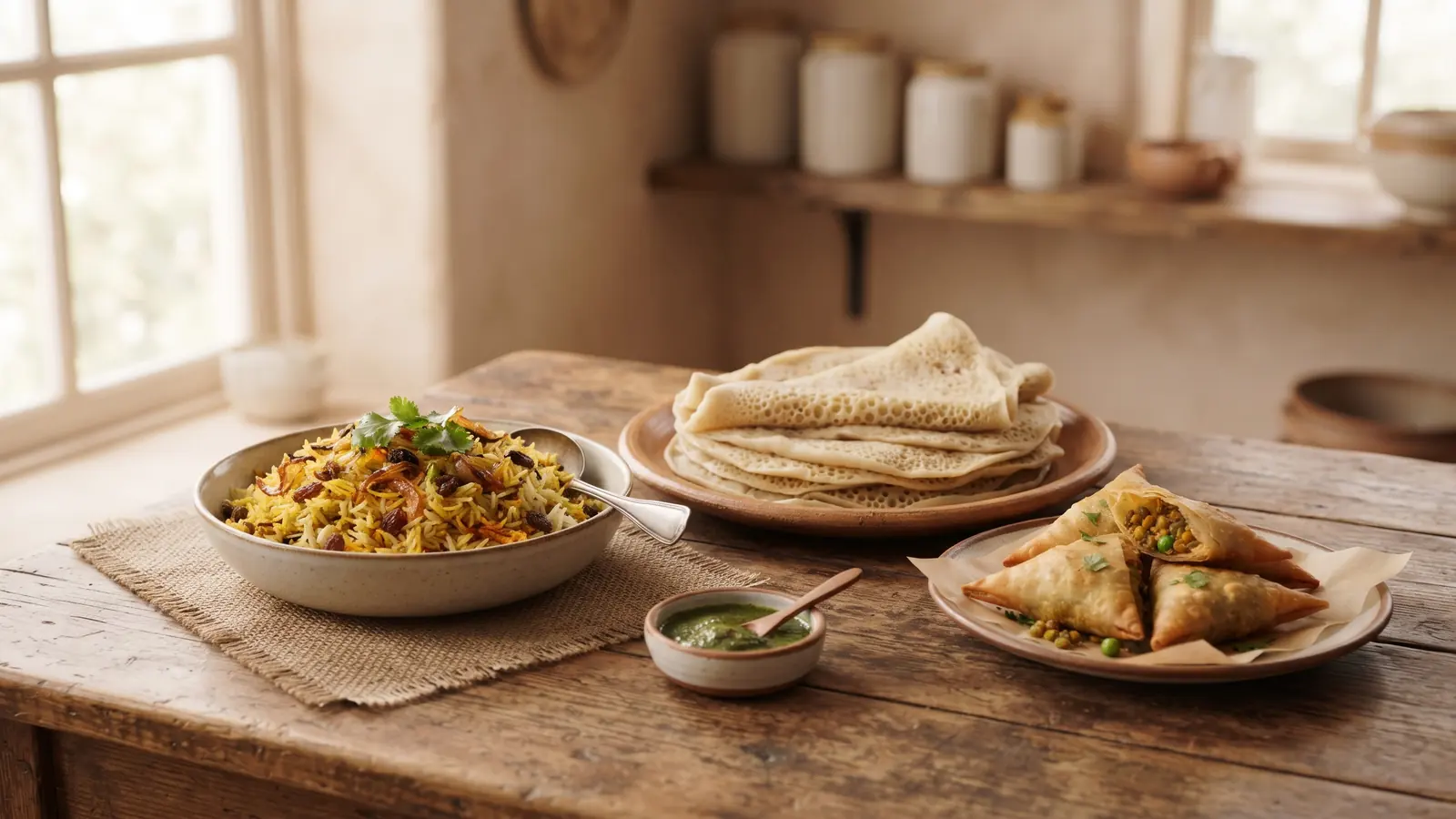
In India, chapati (also called roti) is usually plain whole wheat dough cooked dry and puffed on a flame. In Kenya, Tanzania and Somalia, chapati is richer, often made with white flour and oil, and rolled with coils so that it cooks into soft, flaky layers. Chapati is related to paratha and sabaayad, the flaky flatbread of Somali cooking.
What ingredients do you need?
You need flour, salt, warm water and oil, and nothing else. The ingredients below make eight chapati.
- 3 cups (about 375 g) all-purpose flour, plus extra for rolling
- 1 teaspoon salt
- 1 teaspoon sugar (optional, for browning)
- 3 tablespoons neutral oil or melted butter, plus more for brushing and cooking
- 1 cup (240 ml) warm water, added gradually
Some cooks replace part of the water with milk for a softer bread. Others add a pinch of ground cardamom. Both are optional.
How do you make chapati dough?
Mix the flour and salt, stir in the oil and add warm water gradually until a soft dough forms, then knead for about eight minutes and rest it for 30 minutes.
- Combine the flour, salt and sugar in a large bowl.
- Pour in the oil and rub it into the flour with your fingers until crumbly.
- Add the warm water a little at a time, mixing until the dough comes together.
- Knead on a lightly floured surface for 8 minutes, until smooth and elastic.
- Cover with a damp cloth and rest at room temperature for at least 30 minutes.
The dough should be soft and slightly tacky but not sticky. Resting relaxes the gluten, which makes rolling easier and the cooked bread softer.
How do you roll and layer chapati?
Divide the dough into eight balls, roll each into a thin circle, brush it with oil, roll it up into a rope, coil it and roll it flat again. This makes the layers.
- Divide the rested dough into 8 equal balls.
- Roll one ball into a circle about 8 inches wide.
- Brush the surface with oil and sprinkle with a pinch of flour.
- Roll up the circle into a long rope, then coil the rope into a snail shape and tuck the end underneath.
- Cover the coils and let them rest 10 minutes.
- Roll each coil flat into a circle about 7 to 8 inches wide and an eighth of an inch thick.
Roll gently on the final pass. Pressing too hard merges the layers and gives a flat, tough bread.
How do you cook chapati on a pan?
Cook chapati on a hot, heavy skillet over medium-high heat, about 400°F, for 1 to 2 minutes on the first side, flip, brush with oil, and cook until golden spots appear and the bread puffs in places.
- Heat a dry skillet or flat griddle until a drop of water sizzles.
- Lay one chapati on the pan and cook until bubbles form, about a minute.
- Flip, brush the cooked side with a little oil and cook another minute.
- Flip again and press lightly with a spatula to puff and brown, about 30 seconds.
- Stack in a cloth-lined bowl and cover to keep them soft.
Too low a heat dries the bread out, and too high a heat burns the oil before the center cooks.
What is the difference between chapati, roti and paratha?
Chapati is usually a thin, mostly plain flatbread, roti is the general South Asian name for the same style of unleavened bread, and paratha is a richer, layered bread cooked with more fat. East African chapati sits between roti and paratha because it is layered with oil.
| Bread | Flour | Fat | Texture |
|---|---|---|---|
| Indian roti or chapati | Whole wheat (atta) | None or little | Thin, soft, puffed |
| East African chapati | All-purpose, sometimes mixed | Oil in dough and layers | Soft, flaky, layered |
| Paratha | Whole wheat or all-purpose | Ghee or oil, shaped in layers | Rich, flaky |
| Sabaayad | All-purpose | Oil or ghee | Flaky, pan-fried |
Why is my chapati hard or doughy, and how do you fix it?
Hard chapati has usually been rolled too thick, cooked on low heat, left uncovered or made with dough that was too dry. Doughy chapati was undercooked or rolled so thick that the center stayed raw.
- Use warm water and knead until smooth.
- Rest the dough at least 30 minutes, and rest the coils too.
- Roll thin, about an eighth of an inch.
- Cook on a properly hot pan, and flip often.
- Wrap cooked chapati in a clean cloth straight away.
How do you serve and store chapati?
Serve chapati warm, torn into pieces to scoop stew, rolled around grilled meat as a wrap or alongside rice and beans. Store cooled chapati in a sealed bag for two days, or freeze it for up to three months.
To reheat, warm each chapati in a dry skillet for about 20 seconds per side, or wrap a stack in foil and heat it at 300°F for 10 minutes.
Does Jubba sell chapati?
Yes. Jubba Somali Restaurant at 5330 Terner Way in San Jose lists Chapatti at $3.00 on its sides, described as soft flatbread, according to the Yelp menu page read on November 13, 2026. Its Jubba Chicken is $13.99, Jubba Beef is $15.99 and Fish Wrap is $13.99, each wrapped in chapatti. Chicken Kay Kay at $23.99 and Beef Kay Kay at $24.99 mix chopped chapatti with meat, spiced tea, onions, banana, sesame oil and cilantro.
Yelp says the menu may not be up to date. Zabihah and Yelp list the restaurant as halal, based on the restaurant’s own statement. An owner post on its Google profile, dated September 14, 2026, says it was temporarily closed until further notice as of September 11, 2026, while Google Maps and Yelp still show normal hours. Call (408) 440-1504 before going. This guide is independent and takes no orders. See the menu page and the hours and location page.
Common questions
Why is my chapati hard?
Hard chapati usually comes from dough that is too stiff, not rested, rolled too thick or cooked too long on low heat. Use warm water, rest the dough for 30 minutes and cook quickly on a hot pan.
Can I make chapati dough ahead?
Yes. Wrap the dough tightly and refrigerate it for up to two days. Bring it to room temperature and knead briefly before rolling. Cooked chapati also freezes well between sheets of parchment.
Should chapati dough be sticky?
No. Chapati dough should feel soft and slightly tacky but not stick to your hands. If it clings, knead in a spoonful of flour. If it is dry and cracks, add a teaspoon of water.
What flour is best for chapati?
All-purpose flour gives soft East African style chapati. Whole wheat flour, often called atta in South Asian shops, makes the Indian style and is a little firmer. A mix of the two also works well.
How do I keep chapati soft after cooking?
Stack the cooked chapati and wrap them in a clean cloth or foil right away. The trapped steam keeps them soft. Brush them lightly with oil or ghee if they start to dry out.
Everything practical is on the home page: Jubba Somali Restaurant hours, menu and directions.
This article is general information from an independent guide, not from Jubba Somali Restaurant itself. For the store’s current details see hours and location.